ບ່ອນອີງ ດ້ານນະໂຍບາຍ ໃນການວາງແຜນ ແລະ ປະຕິບັດ ວຽກງານການປັບຕົວ ເຂົ້າກັບການປ່ຽນແປງດິນຟ້າອາກາດ ໃນທຸກຂະແໜງການ ຂອງ ສປປ ລາວ.
ສປປ ລາວ ເປັນປະເທດໜຶ່ງ ທີ່ມີຄວາມບອບບາງສູງ ຕໍ່ການປ່ຽນແປງດິນຟ້າອາກາດ ເປັນຕົ້ນ: ໄພນໍ້າຖ້ວມ ແລະ ໄພແຫ້ງແລ້ງ ຊຶ່ງມີສາເຫດມາຈາກການປ່ອຍທາດອາຍເຮືອນແກ້ວຂຶ້ນສູ່ຊັ້ນບັນຍາກາດ ເຮັດໃຫ້ອຸນຫະພູມສະເລ່ຍເພີ່ມສູງຂຶ້ນໃນໄລຍະຜ່ານມາ. ອີງຕາມການຄາດຄະເນ ຂອງທະນາຄານໂລກ (World Bank) ຈາກການວິເຄາະການຈໍາລອງຄວາມເຂັ້ມຂຸ້ນການປ່ອຍທາດອາຍເຮືອນແກ້ວຂັ້ນສູງສຸດ (RCP8.5) ຄາດວ່າອຸນຫະພູມຈະເພີ່ມສູງຂຶ້ນໃນອະນາຄົດ ປະມານ 3.6 ອົງສາເຊລເຊສ ພາຍໃນປີ 2090 ທຽບໃສ່ຂໍ້ມູນໄລຍະປີ 1986-2005. ການປ່ຽນແປງຂອງອຸນຫະພູມດັ່ງກ່າວ ຈະສົ່ງຜົນກະທົບຕໍ່ສຸຂະພາບ, ຊີວິດການເປັນຢູ່ຂອງປະຊາຊົນ ແລະ ລະບົບນິເວດ.
ການປ່ຽນແປງສະພາບພູມອາກາດທີ່ມີຄວາມຮຸນແຮງ ແລະ ຖີ່ຂຶ້ນ ເປັນສິ່ງທ້າທາຍ ແລະ ສົ່ງຜົນກະທົບ ຕໍ່ກັບສຸຂະພາບ ແລະ ຊີວິດການເປັນຢູ່ ຂອງປະຊາຊົນ ລວມທັງ ການພັດທະນາເສດຖະກິດ-ສັງຄົມ. ຖ້າບໍ່ມີມາດຕະການປັບຕົວທີ່ເໝາະສົມ ຄາດວ່າ ໃນແຕ່ລະປີ ປະຊາກອນທີ່ໄດ້ຮັບຜົນກະທົບຈາກໄພນໍ້າຖ້ວມ ຈະເພີ່ມຂຶ້ນເປັນສອງເທົ່າ ປະມານ 80,000 ຄົນ ໃນຊຸມປີ 2030. ນອກຈາກໄພນໍ້າຖ້ວມແລ້ວ ຍັງມີໄພແຫ້ງແລ້ງ, ລົມພະຍຸ, ດິນເຊາະເຈື່ອນ ແລະ ພະຍາດລະບາດ ທີ່ຈະສ້າງຜົນກະທົບຕໍ່ບັນດາຂະແໜງການສໍາຄັນ. ບັນຫາດັ່ງກ່າວ ໄດ້ສ້າງຜົນກະທົບຕໍໍ່ ຊີວິດ, ຊັບສິນ, ການຍົກຍ້າຍຖິ່ນຖານຂອງປະຊາຊົນ ແລະ ທຸກຂົງເຂດວຽກງານ ເປັນຕົ້ນ: ຂົງເຂດກະສິກໍາ ແລະ ການຄໍ້າປະກັນສະບຽງອາຫານ, ປ່າໄມ້ ແລະ ການປ່ຽນແປງການນໍາໃຊ້ທີ່ດິນ, ຊັັບພະຍາກອນນໍ້າ, ພະລັງງານ, ອຸດສາຫະກຳ, ໂຍທາທິການ ແລະ ຂົນສົ່ງ, ການພັດທະນາຕົວເມືອງ ແລະ ສາທາລະນະສຸກ.
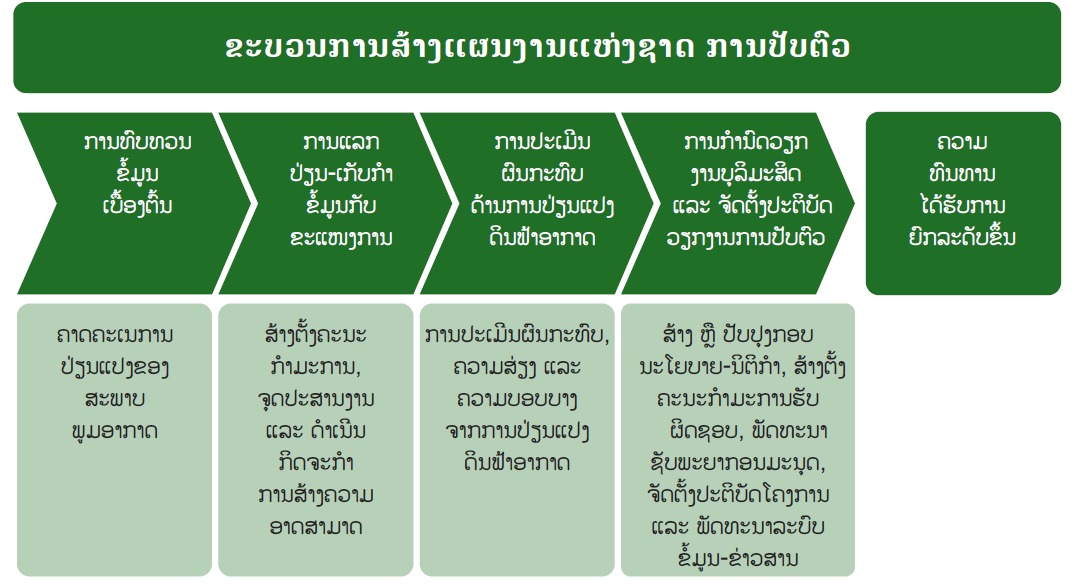
ສະນັ້ນ, ການສ້າງແຜນງານແຫ່ງຊາດ ການປັບຕົວເຂົ້າກັບການປ່ຽນແປງດິນຟ້າອາກາດ ຈຶ່ງມີຄວາມຈໍາເປັນ ແລະ ສໍາຄັນ ຕໍ່ ສປປ ລາວ ເພື່ອເປັນບ່ອນອີງໃນການຈັດຕັ້ງປະຕິບັດວຽກງານການປັບຕົວ ເພື່ອຫຼຸດຜ່ອນຜົນກະທົບ ຈາກການປ່ຽນແປງດິນຟ້າອາກາດ. ແຜນງານສະບັບນີ້ ໄດ້ກໍານົດບັນດາມາດຕະການປັບຕົວຕ່າງໆທີ່ກວມເອົາທັງ ໄລຍະກາງ ແລະ ໄລຍະຍາວ ຊຶ່ງແຜນງານດັ່ງກ່າວສາມາດປັບປຸງ ແລະ ພັດທະນາເພີ່ມເຕີມໄດ້ ເປັນແຕ່ລະໄລຍະ ໂດຍອີງຕາມຈຸດພິເສດ ແລະ ເງື່ຶອນໄຂຂອງປະເທດ. ຈຸດປະສົງຕົ້ນຕໍ ຂອງແຜນງານແຫ່ງຊາດການປັບຕົວເຂົ້າກັບ ການປ່ຽນແປງດິນຟ້າອາກາດ ສະບັບນີ້ ແມ່ນເພື່ອ:
ຫຼຸດຜ່ອນຄວາມສ່ຽງ ແລະ ຄວາມບອບບາງ ຈາກການປ່ຽນແປງດິນຟ້າອາກາດ ໂດຍການສ້າງຄວາມສາມາດໃນການປັບຕົວ ແລະ ສ້າງຄວາມທົນທານ ຕໍ່ການປ່ຽນແປງດິນຟ້າອາກາດ.
ເຊື່ອມສານເອົາ ວຽກງານການປັບຕົວເຂົ້າກັບການປ່ຽນແປງດິນຟ້າອາກາດ ເຂົ້າໃນບັນດານະໂຍບາຍ, ແຜນງານ ແລະ ກິດຈະກໍາທີ່ກ່ຽວຂ້ອງທີ່ມີຢູ່ແລ້ວ ຫຼື ກຳລັງດຳເນີນການສ້າງໃໝ່ ເພື່ອໃຫ້ມີຄວາມສອດຄ່ອງ ກັບບັນດາຍຸດທະສາດ ແລະ ແຜນດຳເນີນງານ ຂອງຂະແໜງການກ່ຽວຂ້ອງ.
ບັນລຸຄາດໝາຍສູ້ຊົນ ດ້ານການປັບຕົວເຂົ້າກັບການປ່ຽນແປງດິນຟ້າອາກາດ ຮອດປີ 2035 ຕາມທິດສີຂຽວ ແລະ ຍືນຍົງ.
ສັງລວມເອົາບັນດາຜົນກະທົບຈາກການປ່ຽນແປງດິນຟ້າອາກາດ ຕໍ່ກັບຂົງເຂດກະສິກໍາ ພ້ອມທັງ ຄາດໝາຍ ແລະ ບາງມາດຕະການ (ກິດຈະກໍາ) ການປັບຕົວທີ່ສໍາຄັນ ທີ່ກ່ຽວຂ້ອງ ຂອງຂະແໜງການ.